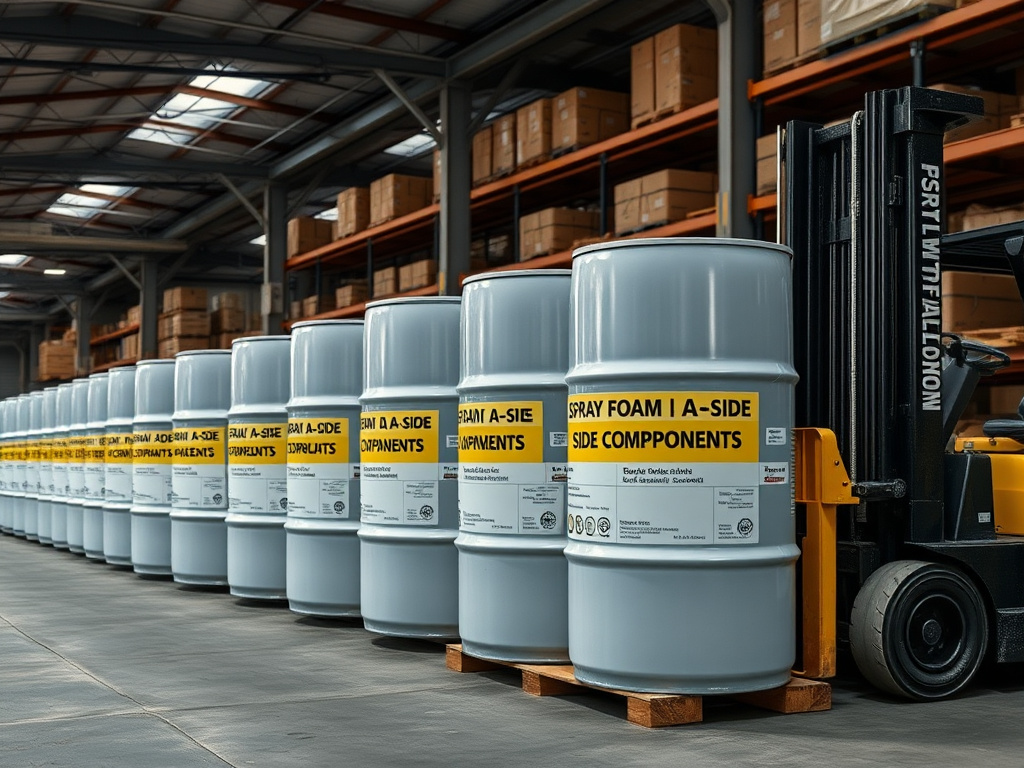
Open-Cell vs. Closed-Cell Foam: A Pro Application Guide
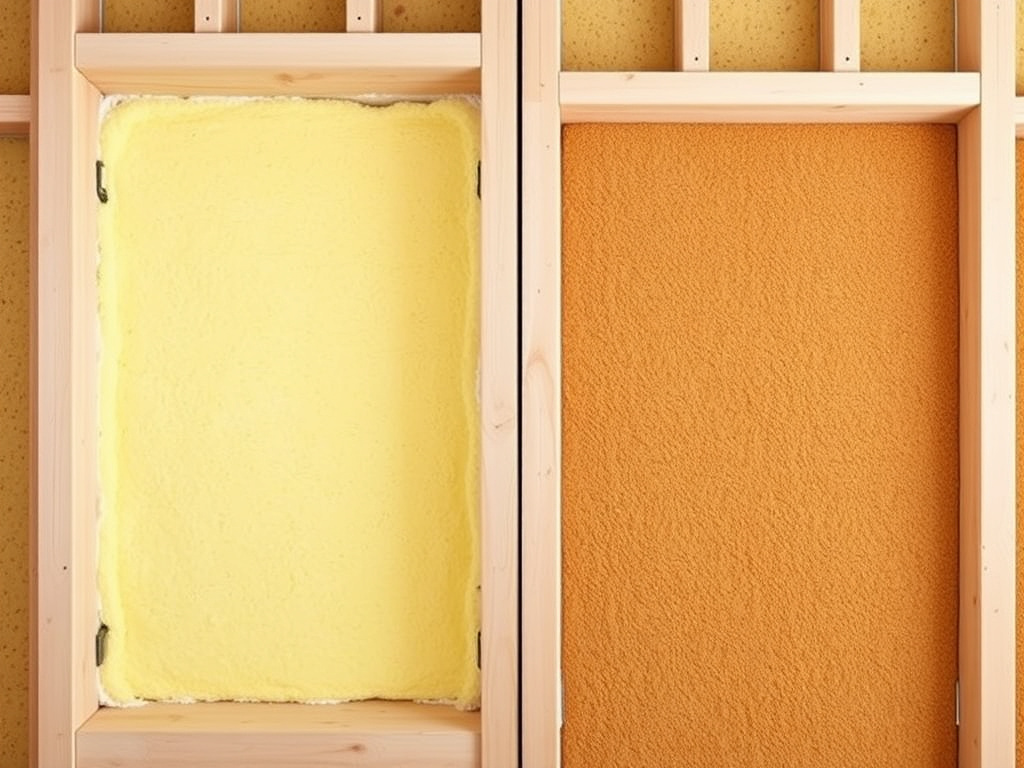
Every homeowner-facing site on the internet has a version of the open-cell-vs-closed-cell comparison. This one skips the cost calculator and focuses on what actually changes at the gun and on the wall — the stuff that affects how you spec and spray a job.
Density is the starting point
Open-cell foam runs around 0.5 lb/ft³. Closed-cell runs around 2 lb/ft³. Those are the standard reference figures used industry-wide, and nearly every other practical difference between the two chemistries traces back to that density gap.
Where each one gets specified
Closed-cell's higher density brings real structural racking strength, much lower vapor permeability at sufficient thickness (functioning as a vapor retarder), and higher R-value per inch — which is why it shows up so often in below-grade applications, roofing assemblies, and exterior envelope work where moisture control and space efficiency both matter. Open-cell costs less per board foot, expands more aggressively, and does a better job filling irregular or hard-to-reach cavities, which makes it a common choice for interior wall and attic applications where vapor permeability and sound dampening are more relevant than vapor-retarder performance.
Pass thickness and the scorching risk
This is the part that actually matters for how you run a job, not just how you spec one. Closed-cell foam's cure reaction is exothermic, and because the material is denser, heat gets trapped inside a thick pass rather than dissipating. Exceed the manufacturer's maximum recommended pass thickness — commonly cited around 2 inches per pass, though this varies by specific formulation and has shifted somewhat with newer HFO-blown chemistry — and you risk scorching, shrinkage, or in extreme cases outright combustion inside the foam. Open-cell tolerates meaningfully thicker single passes, often cited in the 3-4 inch-plus range depending on the product, because it generates less trapped heat during cure.
Ambient conditions change the outcome
Substrate and ambient temperature and humidity both affect reaction quality and adhesion. Every manufacturer publishes minimum substrate temperatures and humidity ceilings for their specific product — there's no single universal number that applies across every chemistry, which is exactly why relying on the current TDS for whatever's actually in the hopper (rather than a memorized rule of thumb from a different product) is the safer habit to build into a crew's routine.
Yield and coverage
How many board feet you get out of a set depends on the specific product's formulation and target density, and manufacturers publish that yield figure for their own product lines. It's not a constant across the industry, so estimating a job's material needs should be based on the actual chemistry being sprayed, not a generic open-cell or closed-cell rule of thumb carried over from a different manufacturer's product.
Frequently asked questions
Commonly cited around 2 inches per pass, but this varies by specific manufacturer formulation and has shifted with the transition to HFO-blown chemistry. Always confirm against the current technical data sheet for the exact product being sprayed.
Closed-cell foam runs around 2 lb/ft³ versus roughly 0.5 lb/ft³ for open-cell — a difference driven by the cell structure and formulation, which is also what gives closed-cell its structural strength and lower vapor permeability.
In extreme cases, yes — the cure reaction is exothermic, and trapped heat from an oversized pass on closed-cell foam can lead to scorching or combustion inside the material. This is a real jobsite safety consideration, not just a cosmetic quality issue.
Running a business this guide touches on?
Get your company listed in the SprayFoamHQ directory so contractors and builders researching this topic can find you.