How a Spray Foam Rig Actually Works: An Equipment Primer
Whether you're evaluating your first rig purchase or just want a cleaner mental model of the equipment you run every day, it helps to break a spray foam rig down into its core functional pieces rather than thinking of it as one black box.
The proportioner is the heart of the system
The proportioner heats, pressurizes, and meters the two chemical components at a fixed ratio before they reach the gun. Most SPF systems spray at a 1:1 ratio by volume, and keeping that ratio accurate is the single most important thing the machine does — an off-ratio shot is the most common root cause of foam quality problems: friability, shrinkage, lingering odor, or poor cure.
In shop talk, you'll hear proportioners referred to by brand almost as often as by type. Graco's Reactor E-series is a common name in the reciprocating-proportioner category, and Graco now also owns the Gusmer line of hydraulic proportioners — so "Gusmer" still gets used informally even on newer Graco-branded hydraulic units. PMC (Poly Machinery Corp) is another established name, particularly associated with reciprocating proportioner designs. Hydraulic proportioners in the Gusmer tradition are commonly cited with output in the rough range of 30-40 lb/min for larger commercial work, with smaller rigs geared lower for typical residential crews.
A-side and B-side, explained simply
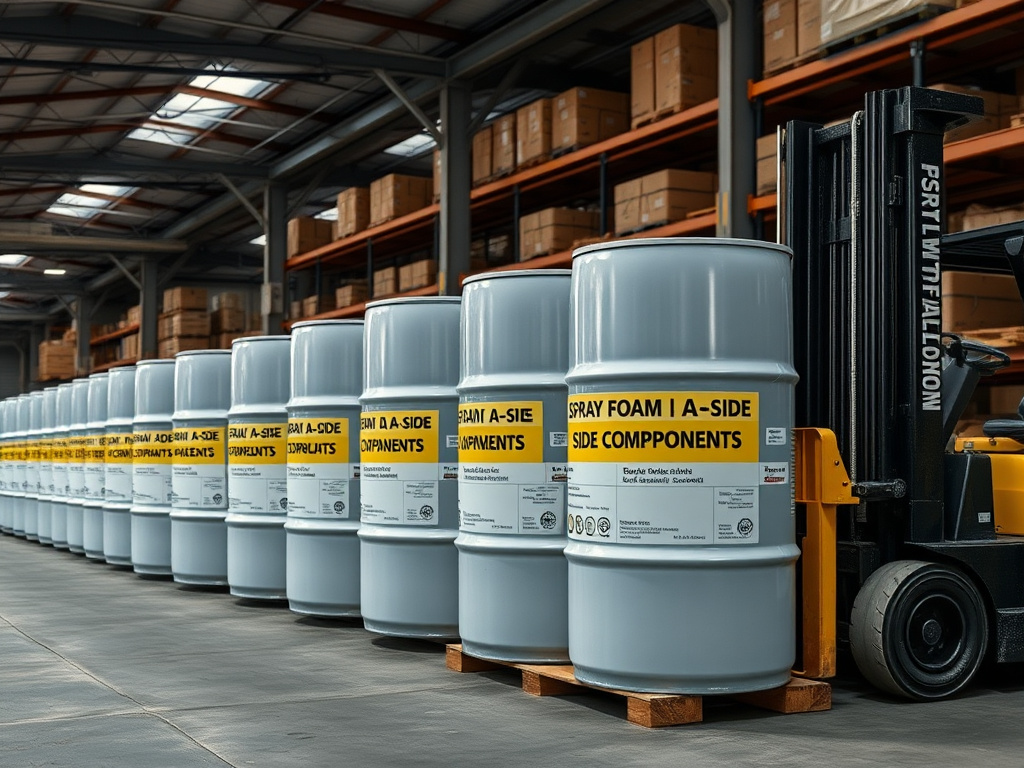
"A-side" refers to the isocyanate component — commonly polymeric MDI. "B-side" is the resin blend: polyol, blowing agent, catalysts, surfactant, flame retardant, and other additives depending on the manufacturer's formulation. The two streams stay separate all the way to the gun's mix chamber, where they combine and begin reacting on the way out of the tip. That's why gun tip and mix-chamber cleaning (or periodic rebuilds) is a routine maintenance task, not an occasional one — buildup or wear at the mix point is where a lot of on-the-job quality issues start.
What the rest of the rig is doing
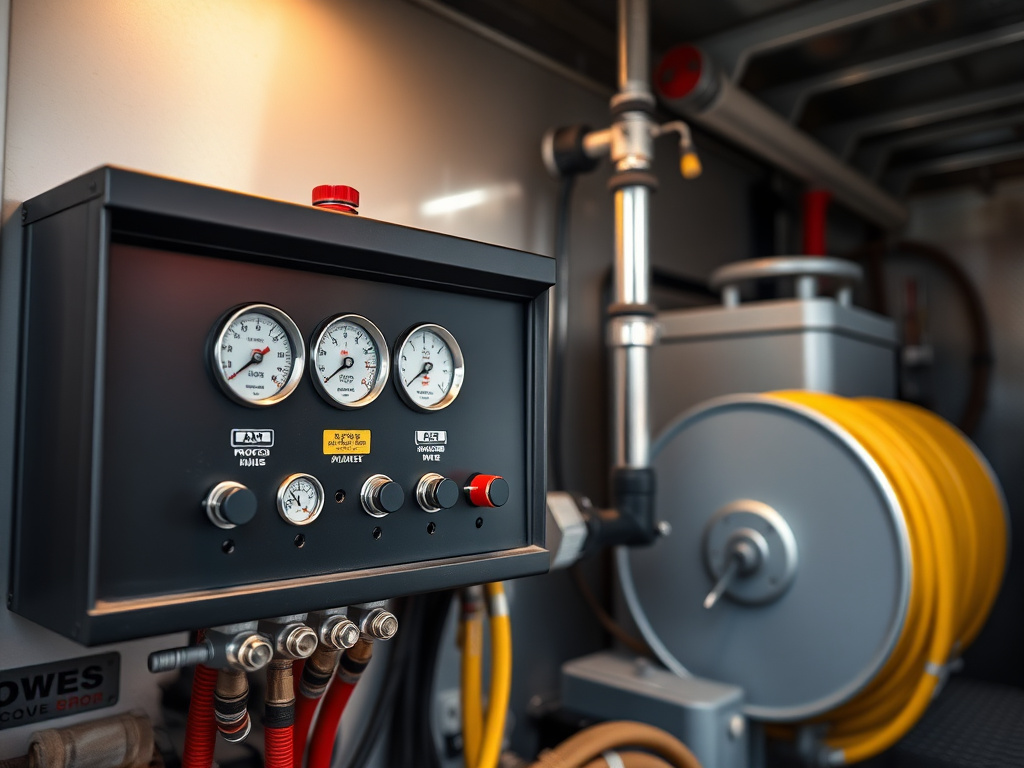
Heated hoses keep both chemical streams at the temperature the reaction needs — commonly discussed in a roughly 120-130°F range, though the exact spec depends on the specific chemical manufacturer's product and should come from that product's technical data sheet, not a rule of thumb. Around the proportioner, a typical trailer rig also carries a generator (or shore power hookup), an air compressor and dryer, transfer pumps to move chemical from drums into day tanks or directly to the proportioner, and a hose reel. Smaller operations run a slide-in or cart-mounted version of the same core components for a truck bed instead of a full trailer.
What rigs typically cost
Pricing moves with the market and with how a rig is configured, so treat these as general starting points rather than a quote. Lower-end cart or mobile setups have typically run in a rough $50,000-$80,000 range, while a fuller trailer rig — generator, compressor, air dryer, transfer pumps, hose reel, and gun package included — has trended toward roughly $100,000 all-in for a new setup. Used equipment varies widely based on hours, hose condition, and proportioner model; there's no reliable single "typical used price" to cite, so budget based on a specific unit's condition and get it evaluated rather than anchoring to a new-rig number.
The maintenance rhythm that keeps a rig producing good foam
- Heated hose temperature and pressure checks against the chemical manufacturer's current spec
- In-line filter changes on a regular interval, not just when output looks off
- Transfer pump packing inspection to catch leaks before they become downtime
- Gun tip and mix-chamber cleaning or rebuild on a defined schedule
- Periodic ratio verification using shot cups or sample checks — ratio drift is silent until it shows up as bad foam
Frequently asked questions
Both meter A-side and B-side chemical at a set ratio, but they use different pumping mechanisms. Graco's Reactor line is a common reciprocating example; hydraulic proportioners are associated with the Gusmer tradition (now under Graco's ownership) and are often specified for higher-output commercial work.
Typical ranges run from roughly $50,000-$80,000 for a smaller cart/mobile setup up to around $100,000 all-in for a fuller trailer rig with generator, compressor, and full accessory package — configuration and current market pricing both move the number, so treat this as a general starting range, not a quote.
Off-ratio spraying is the most common cause of foam quality failures — friability, shrinkage, odor, and poor cure all trace back to it more often than any other single cause. Regular shot-cup checks are the standard way to catch drift before it becomes a job-site problem.
Running a business this guide touches on?
Get your company listed in the SprayFoamHQ directory so contractors and builders researching this topic can find you.