Hiring and Training a Spray Foam Crew in a Tight Labor Market
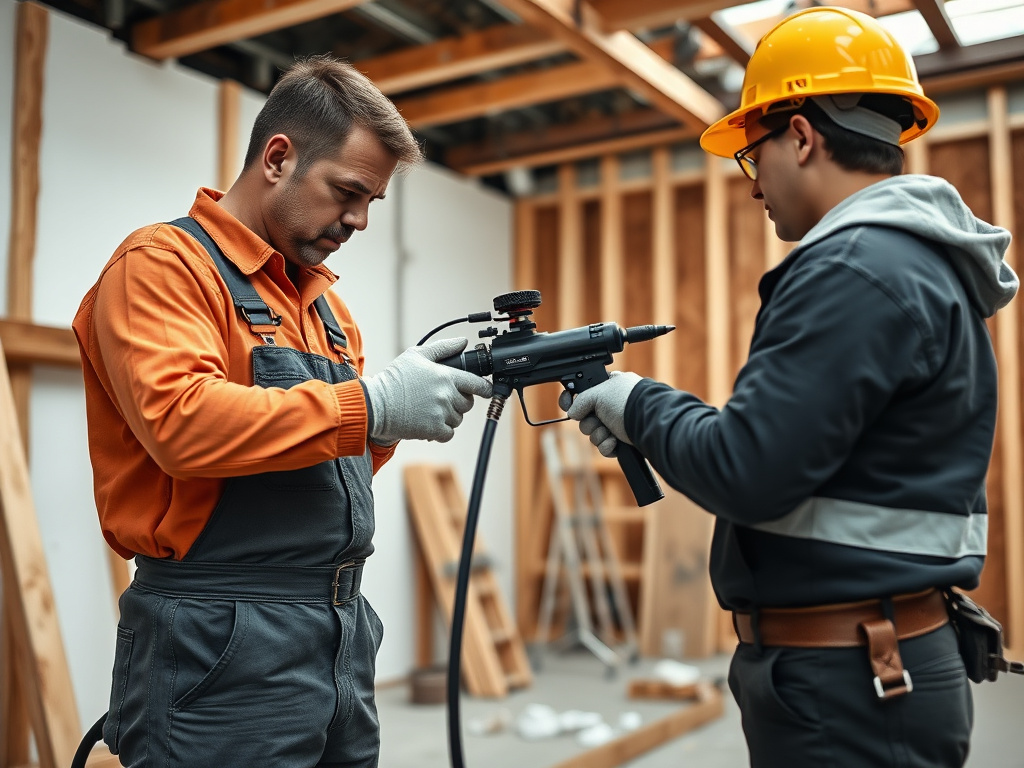
Most conversations about the construction labor shortage focus on hiring. For spray foam specifically, training model and retention deserve just as much attention — because of how SPF techs actually learn the trade.
The real training path
The Bureau of Labor Statistics' occupational profile for insulation workers describes new hires receiving OSHA-mandated safety training, then learning the job through hands-on mentoring from experienced crew members. That's the norm for most residential and commercial SPF spray work — there isn't a standardized multi-year formal apprenticeship most techs go through before they're productive on a rig. (A more formal 4-5 year apprenticeship track exists for mechanical insulators working pipe and industrial insulation in some union settings, but that's a distinct trade segment from typical SPF spray crews, and the two shouldn't be conflated when setting hiring expectations.)
What that means for how you structure onboarding
If competence comes primarily from supervised repetition, then the structure of that supervision matters. A new hire paired consistently with the same experienced tech, with a defined progression from ground support to gun time, will typically ramp faster and more safely than one bounced between different senior techs with no consistent mentor. It also means your most experienced people are a genuine training asset whose time has real cost — factoring mentoring hours into how you price and schedule a new hire's first months isn't overhead, it's the actual cost of building a crew.
Why retention outweighs recruiting in the SPF labor equation
Because so much of a tech's value is built through months of on-the-job reps rather than a portable credential earned before hire, turnover costs more in this trade than in one where new hires arrive already certified and productive. Every departure takes real institutional knowledge with it, and every replacement re-consumes a senior tech's mentoring time. That's the practical argument for treating pay structure, steady scheduling, PPE comfort, and a visible path to lead-tech status as retention investments, not just cost centers.
Where formal certification fits in
SPFA's Professional Certification+ (PCP) program gives techs a portable, third-party-verified credential layered on top of on-the-job experience — useful both as a training milestone for your own crew and as a differentiator when marketing crew quality to customers or subcontracting to a builder. We break down what PCP actually covers in a separate guide, since the specific tier structure is worth understanding before you point a tech toward it.
The recurring compliance task tied directly to hiring
Every new hire needs an initial respirator fit test under OSHA's 29 CFR 1910.134 before they're on a job wearing one — this is a scheduling item to build into onboarding from day one, not an afterthought handled once someone's already on a rig.
Frequently asked questions
There's no fixed industry-standard timeline — it depends on the structure of your mentoring and how consistently a new hire is paired with an experienced tech. A defined onboarding progression tends to produce faster, safer ramp-up than ad hoc, rotating supervision.
For most residential and commercial SPF spray work, no — training is predominantly on-the-job with OSHA safety training and hands-on mentoring. Formal multi-year apprenticeships are more associated with mechanical/pipe insulation, a different trade segment.
No — PCP certification is generally pursued on top of practical experience, as a portable, third-party-verified credential rather than a replacement for hands-on training.
Running a business this guide touches on?
Get your company listed in the SprayFoamHQ directory so contractors and builders researching this topic can find you.